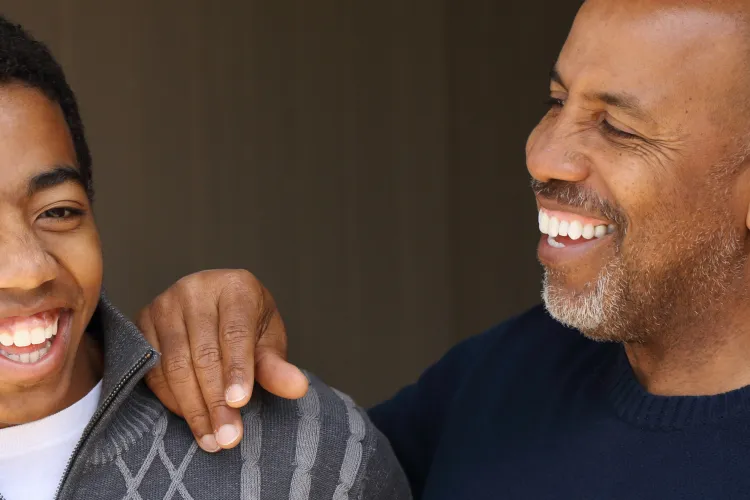
By Kenneth Braswell, CEO, Fathers Incorporated
A 2025 article published in The New York Times does something rare in modern discourse about gender. It slows the conversation down long enough to notice a pattern many families and communities feel but struggle to name.
In “What Happens When Most of the Adults in Boys’ Lives Are Women,” reporter Claire Cain Miller names a reality many educators, parents, and community leaders recognize instinctively: Boys are growing up with fewer consistent relationships with adult men, particularly in schools, youth programs, and other formative spaces. Miller highlights long waitlists for mentoring programs, the gender imbalance in education and caregiving professions, and the developmental consequences of limited male presence. And while Miller’s observations are valid, a larger context must accompany them if we are serious about solutions.
At Fathers Incorporated and across the responsible fatherhood field more broadly, we begin from a different premise. Parents are the first mentors of their children. Fathers, specifically, play a critical and irreplaceable role in that mentorship, regardless of household structure.
Before a child ever meets a teacher, coach, or volunteer mentor, they are already absorbing lessons about identity, responsibility, trust, and belonging at home. Any national conversation about boys and men that does not center fatherhood risks misdiagnosing the problem and misdirecting the response.
Mentorship matters. The work of mentoring organizations is admirable and necessary. Thousands of dedicated volunteers show up every day to support young people, often filling gaps created by economic strain, policy failure, or community disinvestment. But mentorship programs should never be framed, implicitly or explicitly, as substitutes for fathers or as evidence that fathers, as a group, are absent. That narrative is inaccurate and harmful. It reinforces a societal assumption that male absence is the norm and that external programs must serve as saviors for children, particularly those raised in single-parent households.
The existence of single-parent households is not an indicator of a lack of father involvement. This distinction is essential and too often ignored. Many fathers are deeply engaged in their children’s lives even when they do not reside in the same home. They attend school events, provide financial and emotional support, participate in caregiving, and remain active decision-makers. When public discourse collapses single-parent households into narratives of father absence, it erases these men and undermines the engagement we claim to want.
The New York Times article points to schools and youth-serving institutions as primary sites where boys lack exposure to men. That observation is accurate, but it is incomplete without acknowledging how cultural narratives about fathers shape those institutions. When society assumes fathers are peripheral, systems are designed without them in mind. Schools fail to engage fathers meaningfully. Social services communicate primarily with mothers. Policies default to maternal caregiving. Over time, this exclusion becomes self-fulfilling, not because fathers do not care, but because they are not invited, expected, or supported to participate fully.
Responsible fatherhood work exists to interrupt that cycle. It is not about defending men against criticism, nor is it about romanticizing fatherhood. It is about equipping fathers with the skills, support, and opportunity to be present and effective in their children’s lives. It recognizes that healthy masculinity is not taught through slogans, but through daily interaction. Boys learn manhood by watching how their fathers handle stress, treat partners, resolve conflict, and show care. Girls learn what to expect from men by observing how fathers show up, communicate respect, and model accountability.
This is why framing mentorship as a corrective for father absence must be handled with care. When mentoring programs are positioned as replacements for fathers rather than complements to parental involvement, they unintentionally reinforce a deficit narrative. They suggest that communities should plan around absent fathers rather than invest in support for present ones. They risk absolving systems of responsibility to engage fathers meaningfully, shifting the burden to volunteers while leaving structural barriers intact.
The article notes that men are underrepresented in education and caregiving professions and that boys respond differently when they encounter emotionally engaged male adults. That insight aligns with what fatherhood practitioners have long understood. Boys benefit from seeing men in nurturing, instructional, and relational roles. It begins by redefining how society values caregiving and invites men into those roles, starting with fatherhood itself.
Historically, gender roles in work and family life were rigidly defined. Professions were explicitly coded male or female, sometimes even listed as such in newspaper job classifications. Men were expected to produce. Women were expected to nurture. As women rightly gained access to education and professional opportunities, those boundaries shifted. What did not shift at the same pace was the cultural expectation that men should also be nurturers. Nor did workplace policies or institutional cultures adapt to support men in caregiving roles without penalty or suspicion.
Today’s data on boys’ academic struggles and men’s disengagement from certain institutions must be read through that historical lens. These outcomes are not indictments of boys or men. They are the downstream effects of systems that evolved unevenly. When men are socialized to equate worth with earnings and independence, caregiving roles appear risky or incompatible with masculine identity. When institutions treat male involvement as optional rather than essential, engagement declines.
Responsible fatherhood addresses this by reframing masculinity itself. Healthy masculinity is not the absence of care. It is the disciplined presence of responsibility. Fathers who are supported, skilled, and confident in their role are more likely to engage with schools, mentor their children directly, and serve as visible models of balanced manhood. This benefits boys by providing continuity and girls by shaping healthy expectations of men.
The New York Times article correctly avoids blaming women for filling caregiving gaps. Women have carried disproportionate responsibility for generations, often without adequate support. The issue is not female presence. It is male exclusion. And exclusion, whether intentional or not, has consequences. When boys rarely see men teaching, listening, or nurturing, they internalize narrow scripts about masculinity. When girls rarely see men in those roles, their understanding of partnership and leadership is constrained.
We must also resist the temptation to frame this moment as a crisis that pits boys against girls. Gender equity is not a zero-sum equation. Supporting boys does not undermine girls. Engaging fathers does not diminish mothers. In fact, families function best when caregiving and authority are shared responsibilities. Children benefit from multiple models of adulthood, not from a single narrative.
Mentorship programs remain vital. They offer additional layers of support, exposure, and guidance. At their best, they reinforce what children are learning at home. But they cannot and should not be asked to carry the full weight of male engagement. That responsibility belongs first to families, supported by institutions that recognize fathers as assets rather than afterthoughts.
Policy matters here. Paid parental leave that includes fathers communicates that caregiving is a shared responsibility. Father-inclusive school engagement strategies signal that men belong in educational spaces. Workforce policies that allow flexibility without stigma make presence possible. Training programs that prepare fathers for co-parenting, communication, and conflict resolution strengthen families from the inside out.
The danger of omitting responsible fatherhood from this conversation is subtle but significant. Without it, we risk normalizing the idea that fathers are optional and that community programs must compensate for their absence. That narrative discourages engagement, undermines accountability, and ultimately fails children.
Fathers are not a problem to be solved. They are a solution to be supported. Parents are not peripheral to mentorship. They are its foundation. When fathers are equipped to be effective mentors to their own children, the demand placed on external systems decreases, and the quality of those systems improves.
Understanding how we arrived at current disparities requires honesty, not blame. Moving toward true gender equity requires intention, not nostalgia. Equalizing opportunity, expectation, and relevance across gender lines means recognizing that fatherhood is not merely a private role, but a public good.
The New York Times article opens an important conversation about boys and men. The responsible fatherhood field adds the missing context: The most powerful mentors are already in children’s lives, and our collective task is to ensure they are supported, engaged, and uplifted — not erased — by the stories we tell about families.
The question before us is not whether mentorship matters. It does. The deeper question is whether we are willing to invest in fathers as the first mentors of their children and to stop conflating household structure with parental involvement. If we are serious about boys, serious about girls, and serious about equity, that is where the work must begin.