Mothers and grandmothers often carry a great deal of responsibility within families. They may step in to protect children, solve problems, provide stability, and make sure nothing is overlooked. Their involvement is usually rooted in love and concern. However, even well-intentioned support can become interference when it doesn’t leave room for a father to develop his own parenting identity.
Our first “& Co” participant began to recognize the ways she had inadvertently blocked her son from becoming the best father he could be.
by Dr. Matisa Wilbon, Co-Chair, Moynihan Institute for Fatherhood Research and Policy
When we interviewed the first “& Co” participant from our new Dad & Company fatherhood program, her story captured the heart of why our work with fathers and their parenting teams matters.
She joined the program alongside her adult son, who is the father of a young daughter. Although he began the Dad & Company curriculum, changes in his work schedule have prevented him from continuing at this time.
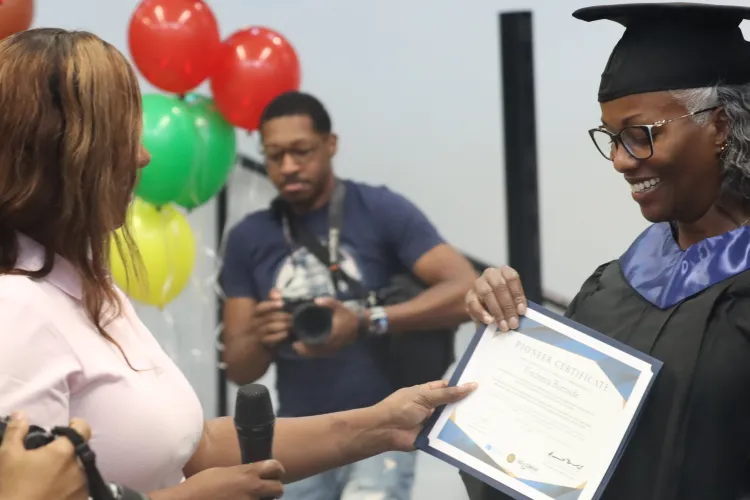
She could have stopped attending when he did. Instead, she stayed, and what she learned changed the way she understood her role as a mother, a grandmother, and a member of her son’s parenting support system.
Hearing Fathers Changed Her Perspective
One of the most powerful parts of her “& Co” experience was listening to the fathers in the program as they shared their lived experiences.
She heard men speak openly about the challenges they faced while trying to remain connected to their children. They discussed the emotional, relational, and practical barriers that sometimes made fatherhood more difficult. They also spoke about their desire to be present, trusted, and respected as parents.
Listening to those fathers caused her to reflect on her own family. She realized that although she had always intended to help her son, there were moments when her support may have unintentionally prevented him from fully stepping into his role as a father.
Her presence was important, but she began to understand that she did not need to lead his parenting. She needed to add to it.
That distinction became one of the most important lessons she took from the program.
When Help Becomes Interference
Mothers and grandmothers often carry a great deal of responsibility within families. They may step in to protect children, solve problems, provide stability, and make sure nothing is overlooked. Their involvement is usually rooted in love and concern. However, even well-intentioned support can become interference when it doesn’t leave room for a father to develop his own parenting identity.
Our first “& Co” participant began to recognize the ways she had inadvertently blocked her son from becoming the best father he could be.
This realization wasn’t about assigning blame. It was about increasing awareness. She saw that her experience as a parent didn’t mean she should automatically take the lead. Her son needed opportunities to make decisions, build confidence, establish routines, and form his own relationship with his daughter.
A support system should strengthen a father’s role, not replace it.
Applying the Curriculum at Home
The most significant part of her story is that the lessons didn’t remain in the classroom. She began implementing the Dad & Company curriculum in her real life.
She adjusted the way she communicated with her son. She became more intentional about when she offered advice and how she offered it. She created more space for him to make parenting decisions and began treating him not only as her son, but also as a father with his own responsibilities and authority.
As her approach changed, her relationship with her son changed. Their communication improved. The tension between them decreased. Her son had more room to express himself, make decisions, and grow in confidence.
These changes also affected his relationship with his daughter. As his mother made space for him to lead, he became more engaged in his role. His relationship with his daughter improved, and the entire family began to experience the benefits of healthier boundaries and stronger communication.
This is what family transformation can look like. It doesn’t always begin with a dramatic event. Sometimes it begins with one person becoming willing to listen, reflect, and make a different choice.
The Father Is the Doorway, but the Child Lives in a Family System
Dad & Company is built on the understanding that fathers do not father alone. This innovative program remains father-centered while recognizing that every father is surrounded by a larger family and support system that may include the child’s mother, grandparents, siblings, partners, mentors, extended family members, and trusted friends.
Keeping fathers at the center doesn’t require us to exclude everyone else. It requires helping each person understand how to contribute in a way that strengthens the father-child relationship.
The “& Company” portion of the Dad & Company program creates space for dads’ support people to learn, grow, and examine how their own behaviors affect the family. The goal isn’t to force every adult into agreement or pretend that every relationship is healthy. The goal is to establish clearer expectations, improve communication, cultivate trust where possible, and keep the child’s well-being at the center.
Our first “& Co” participant demonstrated why this approach is necessary.
Her son was the father who enrolled in the program, and the lessons she learned as his “& Co” changed the environment surrounding his fatherhood.
Keeping the Main Thing the Main Thing
In family relationships, it is easy for adults to become focused on authority, past mistakes, unresolved conflict, or who has done the most.
Dad & Company continually brings participants back to one central question: What is the main thing?
The answer is the child.
Co-parenting maturity requires adults to stop measuring success by whether they win an argument or prove they’re “right.” Instead, they must consider whether their choices help the child remain emotionally safe, connected, and supported.
For this grandmother, keeping the child at the center meant reconsidering how she supported her son. Her granddaughter didn’t need her to compete with her father or take his place. She needed a grandmother who could encourage her father, respect his growth, and contribute to a healthier parenting team.
That didn’t mean ignoring concerns or removing accountability. It meant addressing concerns without undermining him. It meant offering wisdom without taking control. It meant understanding that sometimes the most supportive thing a family member can do is step back enough for a father to step forward.
The Heart of Dad & Company
The transformation experienced by this family reflects the heart of Dad & Company.
The program isn’t about teaching fathers in isolation. It’s about strengthening the relationships and family systems that surround them.
When one member of a parenting team changes, the entire family dynamic can begin to change. In this case, a mother/grandmother listened to the stories of other fathers and began to see her son differently. She applied what she learned, changed the way she supported him, and improved their relationship.
As their relationship changed, his relationship with his daughter changed for the better. This is why the “& Company” matters. Fathers need encouragement, accountability, skills, and support.
They also need room to father.
The people who love them can either make that room smaller or help him expand it.
Our first “& Co” participant chose to expand it. Her story reminds us that support isn’t always taking the lead. Sometimes support means standing beside a father, adding strength where it’s needed, and trusting him to grow into the role that belongs to him.