We regularly use the language of family while designing research, programs, clinics, schools, and policies exclusively around the mother-child relationship. The father is then added as an outreach strategy, a special population, or optional participant. We invite him into a structure that was never designed with him in mind. Then, when he doesn’t immediately feel that he belongs, we describe him as difficult to engage.
The work ahead isn’t simply to place more fathers inside existing family programs. It’s to reconsider the architecture of those programs.
By Kenneth Braswell, CEO, Fathers Incorporated
Some of the most meaningful conversations at conferences take place off-stage. They happen around tables. People lean toward one another. Someone tells a story. Another person recognizes part of their own life in it. And before long, what began as a discussion becomes a mirror, revealing what our families have carried, what our institutions have overlooked, and what our work must become.
That’s what happened during a roundtable discussion led by Dr. Dena Barnwell at the 2026 National Alliance for Relationship and Marriage Education (NARME) Summit. The conversation was called “Fatherhood and Family Synergy,” but it became much more than a conversation about fathers. It became a serious examination of what we mean by the word “family.”
Dr. Barnwell entered fatherhood research through maternal and child health. As she studied the literature and prepared her academic work, she noticed something that should trouble everyone committed to family well-being: Fathers were largely missing.
Mothers were discussed. Children were studied. Pregnancy, birth, development, health, and family stability were examined. Yet the father was often treated as though he stood somewhere beyond the borders of the family picture. The absence made no sense to her because it didn’t reflect her own life. Her father had been active and involved. She couldn’t think about mothers and children without also thinking about dads.
Her observation points to one of the most persistent contradictions in human services. We regularly use the language of family while designing research, programs, clinics, schools, and policies exclusively around the mother-child relationship. The father is then added as an outreach strategy, a special population, or optional participant. We invite him into a structure that was never designed with him in mind. Then, when he doesn’t immediately feel that he belongs, we describe him as difficult to engage.
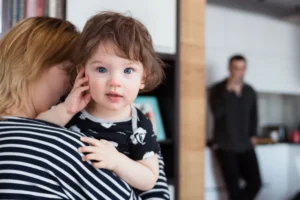
Fathers report attending medical appointments with their partners and children, only to have every question directed toward the mother. They sit close enough to touch their child while being treated as though they aren’t in the room. One father recalls being asked to leave during his daughter’s examination even though he changed her diapers, bathed her, and cared for her at home. That may appear small to someone who has never experienced it, but it isn’t small to a father.
It tells him that his caregiving is invisible. It tells the mother that the emotional and medical responsibility for the child belongs primarily to her. It tells the child, even before the child understands the words, that one parent is essential while the other is secondary.
Institutions teach families how to see themselves. Every intake form, waiting room, classroom contact sheet, parenting brochure, and professional interaction communicates something about who matters.
The roundtable offered a better framework. Dr. Barnwell introduced the idea of family synergy, the belief that when family members work together, their combined contribution becomes greater than what any one person can produce alone. Family synergy isn’t merely about living in the same house. It isn’t the appearance of togetherness. It’s the active coordination of strengths, responsibilities, relationships, and care.
Juanita Goss of Fathers Incorporated described it as the rhythm of a family functioning well. People prepare meals, manage schedules, get children where they need to go, handle responsibilities, and make room for shared experiences. When that rhythm is healthy, she said, family members can feel its smoothness. It “sends them off at peace, and it brings them back to peace.”
Her statement stayed with me. What if peace were one of the measures we used to evaluate family strength? Not perfection. Not the absence of disagreement. Not whether every family looks the same. Peace. The confidence that I’m not carrying everything alone. The knowledge that someone sees what needs to be done. The assurance that when I leave this house, I’m connected to people who care whether I return.
One participant described the family meal as one of the most therapeutic moments in a household. Someone earns the money to purchase the food. Someone shops. Someone cooks. Someone sets the table. Someone clears it. Everyone contributes, and everyone has an opportunity to speak. The meal becomes more than food. It becomes communication, accountability, memory, and belonging.
A child who has struggled at school may not announce it formally. He may reveal it slowly between bites. A teenager may look down at her plate because she knows her father can see that something is wrong. A mother may finally say that she’s tired. A father may discover that his family doesn’t simply need more from him. They need more of him.
This is where the responsible fatherhood field and the marriage and relationship education field must meet.
Synergy Between Responsible Fatherhood and Marriage Education
Responsible fatherhood programs have often been expected to repair men individually. We teach fathers communication, parenting, employment readiness, emotional regulation, conflict resolution, and financial responsibility. These skills matter. Fathers must be accountable for the choices they make and the effect those choices have on their children.
Yet fathers don’t parent in isolation. They parent within relationships, histories, institutions, legal arrangements, work schedules, and family systems. We can’t prepare a father to become more engaged and then return him to environments that continue to treat his engagement as unnecessary.
Relationship education can’t speak seriously about strengthening families without examining whether fathers are welcomed, respected, and equipped to participate. Fatherhood education cannot speak seriously about engagement without helping men understand partnership, co-parenting, marriage, communication, trust, and the emotional needs of the people with whom they are raising children.
The two fields need each other.
One of the outdated assumptions discussed at the roundtable was that fathers are merely providers. The problem isn’t the need for provision. The problem is that we reduced provision to money.
A father may provide income, but he also provides reassurance, boundaries, perspective, protection, affection, cultural identity, family history, humor, discipline, and vision. He may see trouble approaching because he once walked the same road. He may recognize a silence in his son because he carried that silence as a boy. He may understand his daughter’s fear before she has the words to explain it.
A paycheck can support a household, but it can’t listen to a child or model an apology. It can’t sit beside a frightened teenager, teach a son how to regulate his anger, or remind a daughter that she’s worthy of respect.
When we measure a father only by what he pays, we overlook what his presence may produce.
Family Synergy Through Marriage and Co-Parenting
Marriage entered the conversation at the family synergy roundtable through a simple change in language. A participant offered a scenario involving job loss. In one relationship, the response might be, “What are you going to do?” Within a healthy marital partnership, the question becomes, “What are we going to do?”
That movement from you to we is one of the deepest promises of marriage.
At its best, marriage converts individual problems into shared responsibilities. It creates the possibility of collective assets. When one person loses employment, the other person’s income may sustain the household. The parent who is temporarily unemployed may have more time to care for the children, manage appointments, prepare meals, or support the working parent. The family doesn’t deny the hardship. It reorganizes around it.
A marriage license by itself can’t create that spirit. Two people can be married and remain emotionally divided. Two parents can live apart and still develop a mature, cooperative parenting alliance. What matters for children is whether the adults can move beyond the question of who’s winning and begin asking what the family needs.
When a romantic relationship ends, the parenting relationship doesn’t disappear. The child remains connected to both parents. Responsible fatherhood work must help fathers understand that anger toward a former partner can’t become an excuse for withdrawing from a child. Relationship education must help mothers and fathers understand that children should never become messengers, weapons, evidence, or prizes in unfinished adult conflict. The couple may have ended, but the parenting team still has work to do.
Challenging Fatherhood Stereotypes for Family Synergy
Another central theme was the need to replace deficit-based assumptions with asset-based understanding. Research has too often begun with father absence, failure, nonpayment, or risk. Public campaigns have threatened fathers with punishment. Media portrayals have presented fathers as emotionally unavailable, incompetent with children, or incapable of completing basic caregiving tasks without a mother rescuing them.
Even schools may automatically list the mother as the primary contact without asking which parent is more available. Social services may offer childcare assistance to the custodial parent while overlooking a nonresident father who works weekends and needs care for the child during his parenting time. Parenting classes, home-visiting programs, maternal health services, and family supports may all say fathers are welcome while operating in ways that communicate otherwise.
An asset-based narrative begins with a more honest question: What does this father already bring?
Perhaps he gets up every morning and goes to work. Perhaps he calls his children every night. Perhaps he knows how to calm his daughter. Perhaps he has survived incarceration, addiction, unemployment, grief, or childhood abandonment and is still trying to show up differently for his children. Perhaps he needs instruction, accountability, healing, or support. None of those needs erase the strengths that brought him to the door.
A roundtable participant offered this powerful challenge: “We have to become the asset we want.”
That isn’t a release from accountability. It’s a deeper form of it. Fathers can’t demand that society recognize their importance while refusing to become dependable. We must keep our word. We must show up. We must stay when staying becomes difficult. We must repair what we’ve damaged and allow our children time to believe that our change is real.
Father-Inclusive Family Synergy
Systems have responsibilities, too. Universities train social workers, educators, public health professionals, clinicians, and family-service practitioners to work with families, yet many graduates complete their education having studied little about fathers. Professionals are sent into communities without the knowledge or confidence needed to engage men. When instructed to include fathers, some become anxious because father engagement was never part of their training.
This must change.
Every school of social work, public health program, early childhood department, nursing school, counseling program, and teacher preparation curriculum should address fathers as parents. Practitioners should learn how to identify fathers, speak directly to them, assess their needs, understand different family structures, recognize safety concerns, build rapport, and support healthy father-child relationships.
“Family” should never be used as a more comfortable word for “mother and child.”
Making Room for Children’s Voices in Family Synergy
The roundtable also made space for the voices of children. Children aren’t passive passengers on a family journey. They influence the emotional climate of the home, respond to parental conflict, develop expectations about relationships, and participate in the rituals that hold families together.
They should be taught not only what they can receive from a family, but what they can contribute.
Children can help prepare meals, participate in family meetings, and express appreciation. They can offer ideas about weekend activities, vacations, household routines, and family traditions. Their opinions should be sought in age-appropriate ways, especially when adults are prepared to genuinely listen.
When children contribute in these ways, they begin to understand that belonging carries responsibility. They learn that family isn’t a service being performed for them but a community being built with them.
That kind of formation is desperately needed in a culture that increasingly trains us to consume without connecting. Devices follow us into bedrooms, kitchens, cars, and restaurants. Families can sit within inches of one another while living in separate digital worlds. Meals are collected through drive-through windows and eaten behind closed doors. Conversations are replaced by scrolling. Exhausted parents sometimes use technology to buy a few moments of quiet, only to discover later that the device has become more familiar to the child than the people in the room.
The answer isn’t nostalgia. The answer is intentionality. Perhaps a family can begin with two device-free meals each week. Perhaps children can select and prepare food. Perhaps parents can ask questions that can’t be answered with one word. What made you proud today? What worried you? Who needed your kindness? What do you need from us this week?
These practices may appear ordinary, but families are often saved through ordinary things repeated faithfully.
Next Steps for Family Synergy
The responsible fatherhood field must help fathers understand that presence is built through such moments. The marriage and relationship education field must help couples create the communication, trust, cooperation, and shared expectations that make these moments possible. Programs shouldn’t merely teach adults how to avoid conflict. They should help families establish rituals that produce connection.
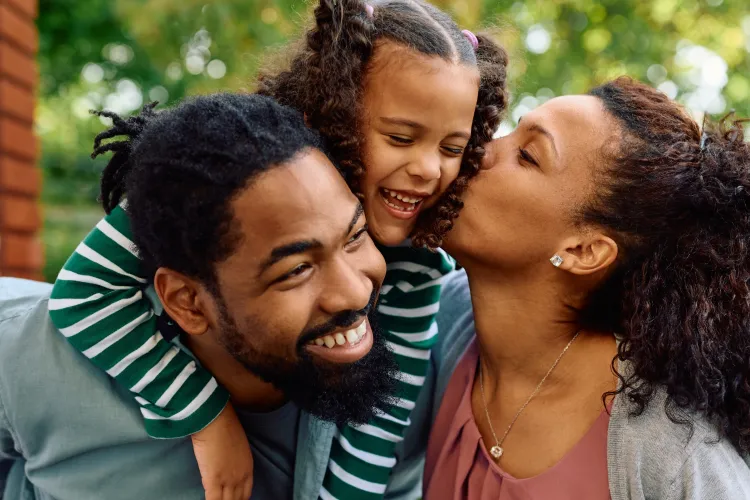
Family synergy begins when the mother isn’t expected to carry the emotional, logistical, and caregiving burden alone. It begins when the father isn’t reduced to a wallet, a risk factor, or a name missing from an intake form. It grows when children are given both a voice and a role. And it’s protected when couples and co-parents learn to approach hardship through the language of “we.”
The work ahead isn’t simply to place more fathers inside existing family programs. It’s to reconsider the architecture of those programs. Fathers must be present in research questions, curricua, staffing, outreach, data collection, professional training, and definition of success.
There should be a chair for him before he arrives.
When that happens, we may discover what Dr. Barnwell’s roundtable made so clear. Fathers were never separate from the marriage and relationship conversation. They were never outside maternal and child health. They were never incidental to family stability.
We simply built too many rooms without leaving space for them.
Now we have an opportunity to rebuild. Not around the father alone. Not around the mother alone. Not around an idealized image of family life that ignores struggle, separation, or complexity.
We must build around the entire family. A family where everyone is seen and heard. A family where everyone is expected to contribute. A family that sends its members into the world with peace and welcomes them home with peace.
That’s family synergy, and fathers belong at the center of creating it.